
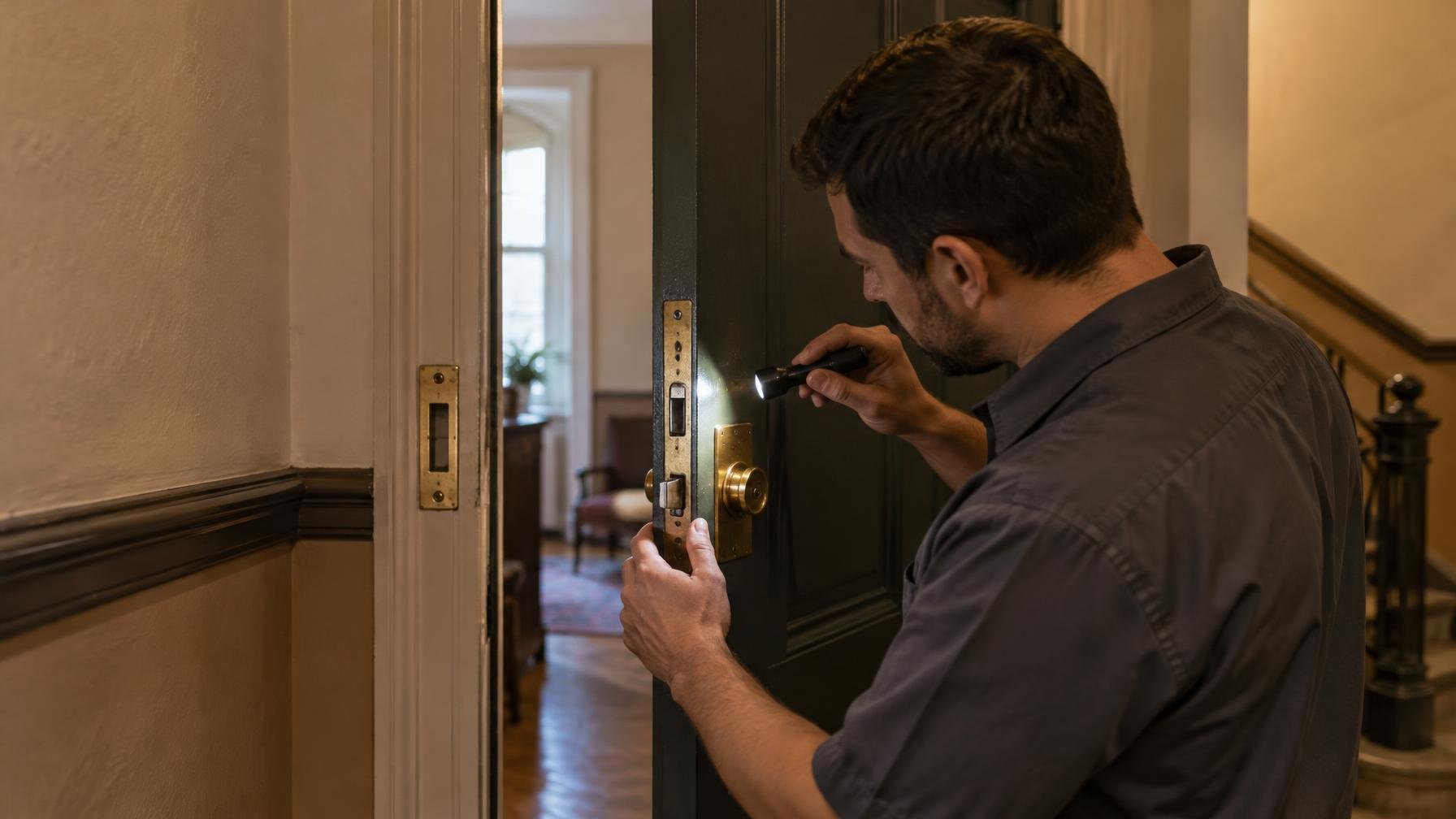
If your Upper West Side apartment lock sticks, the deadbolt needs a shoulder push, or the key turns without unlocking the door, the problem may be repairable without replacing the entire lock. LEO Locksmith provides mobile door lock repair on the Upper West Side, with the technician quoting the price on site before work starts. Stop forcing the hardware first: a bent key or damaged mechanism can turn a manageable repair into a lockout.
What your lock problem is telling you
A lock is only one part of the entry. The cylinder, latch, deadbolt, hinges, strike plate, and door frame all have to line up and work together. On the Upper West Side, that can mean troubleshooting an older mortise lock in a prewar apartment, a deadbolt on a brownstone entrance, or heavily used hardware at a shared vestibule.
The key works when the door is open, but not when it is closed
This often points to alignment rather than a failed cylinder. The bolt may be hitting the edge of the strike plate instead of entering its opening. Loose hinges, door movement, paint buildup, or changing weather can contribute. Having to lift the handle or pull hard on the door every time you lock it is a warning sign—not a normal operating technique.
The key is difficult to insert or turn either way
A worn or bent key, debris in the keyway, or wear inside the cylinder may be responsible. If you have a known-good spare, compare how it works without forcing it. When one key sticks and another operates smoothly, mention that distinction to the technician. It can help separate a key problem from a lock problem.
The handle moves, but the latch stays put
A loose connection or failed internal part may prevent the handle from retracting the latch. Older mortise locks combine several functions inside a case fitted into the edge of the door, so a problem may require more than tightening a visible screw. Avoid taking the case apart yourself, especially if this is your only usable entrance.
Safe checks before you request a repair
Keep these checks brief. The goal is to describe the problem accurately, not to dismantle your door or push a failing lock past its limit.
- Inspect the key. Stop using it if it is bent, cracked, or visibly damaged. Do not try to straighten it while it is inside the lock.
- Check for an obstruction. A loose mat, weatherstripping, or an item caught at the threshold can keep a door from closing fully.
- Compare open and closed operation. If you can safely keep control of the door, gently test the lock with it open. Retract the bolt completely before closing it.
- Look for movement. Note whether the handle, cylinder, or trim plate shifts during normal use. Do not remove hardware to investigate.
- Avoid improvised fixes. Do not insert tools, glue, or household oil into the keyway. Use only a lubricant approved for the specific lock if the manufacturer recommends it.
Do not let an apartment door swing shut behind you during testing. Keep your keys with you, and never prop open a shared security or fire door.
Why Upper West Side doors need a careful diagnosis
Prewar apartments and older mortise hardware
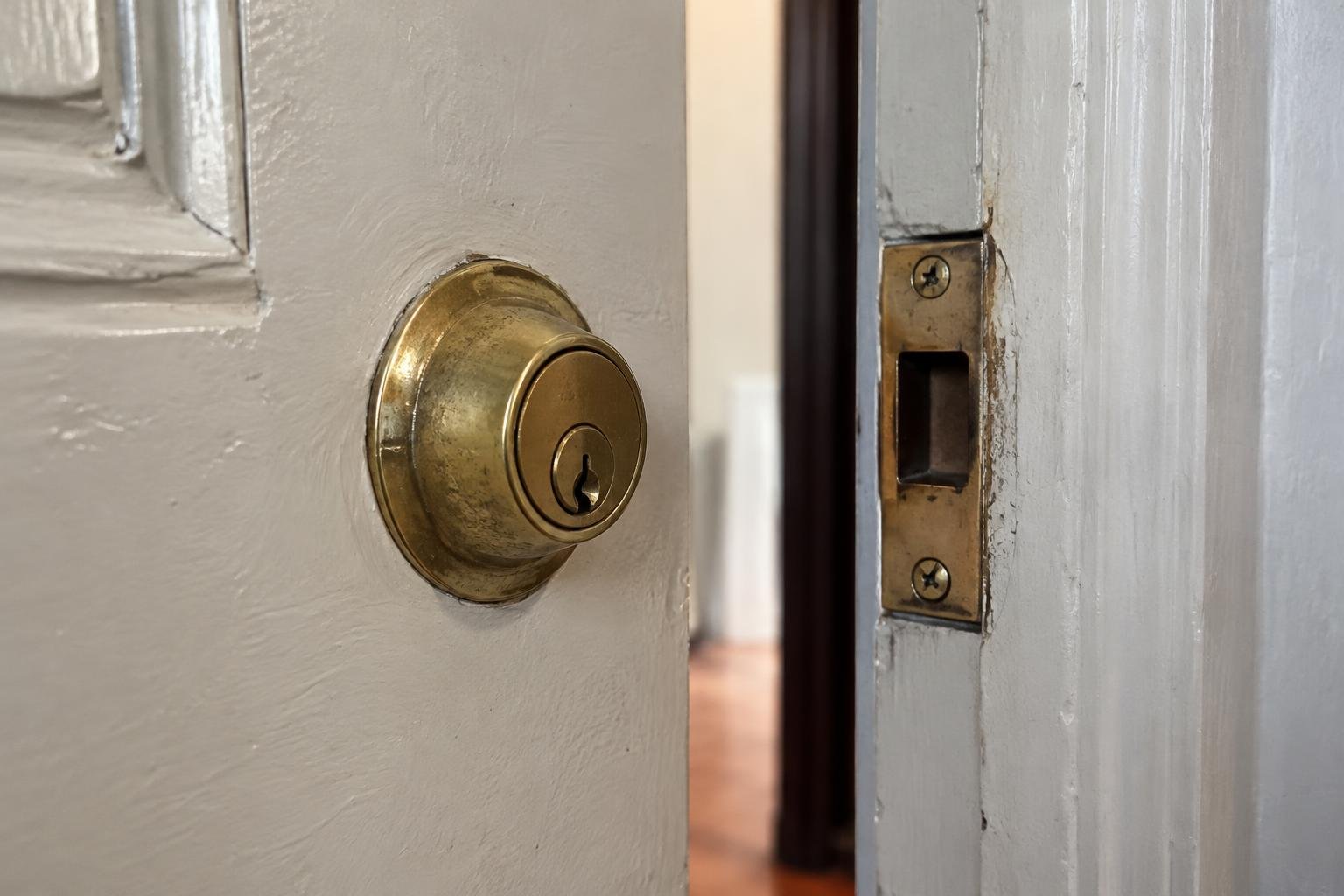
In prewar buildings around Broadway, West End Avenue, and Riverside Drive, apartment doors may have older hardware with dimensions that do not match a basic replacement deadbolt. The visible trim alone does not identify the internal lock. A technician should check the cylinder, case, handle connections, and strike before recommending which component needs attention.
Repair can make sense when the main mechanism remains sound and the fault is limited to an adjustment or replaceable component. If internal parts are badly worn or compatible parts are unavailable, replacement may be more practical. Keeping the original appearance should not come at the expense of reliable locking and exit.
Brownstone entrances and weather exposure
An exterior entry near a stoop faces different conditions from an interior apartment door. Moisture and seasonal temperature changes can affect wood doors and clearances. If the same lock becomes harder to operate during damp weather, tell the technician. Replacing the cylinder alone will not resolve a bolt that is binding against the frame.
Shared entrances and high-use doors
A vestibule entrance that serves many households gets repeated use throughout the day. A door that fails to latch may have a lock problem, but its closing action and alignment also need assessment. Report shared-entry issues to management rather than adjusting communal hardware yourself. Never tape the latch back or wedge the door open as a workaround.
Repair, rekey, or replace: which service fits?
These services solve different problems. The right choice depends on whether the issue is mechanical failure, control of existing keys, or hardware that no longer meets the door’s needs.
- Repair: Appropriate when existing hardware can be restored to reliable operation through an adjustment or a suitable component repair. LEO’s door lock repair service addresses problems such as sticky cylinders, loose handles, and misaligned deadbolts.
- Rekey: Changes which key operates a compatible lock without replacing the entire assembly. It is useful after lost keys or authorized tenant turnover, but it does not fix a sagging door or broken latch. Learn more about rekeying existing locks.
- Replace: May be necessary when the mechanism is damaged beyond practical repair, essential parts are unavailable, or the installed hardware is unsuitable. The door’s condition and existing preparation matter when choosing replacements.
Ask the technician to explain what failed and whether the proposed work addresses the cause. If the bolt is scraping the strike, for example, a new key will not solve the underlying alignment issue.
When a sticking lock becomes an urgent problem
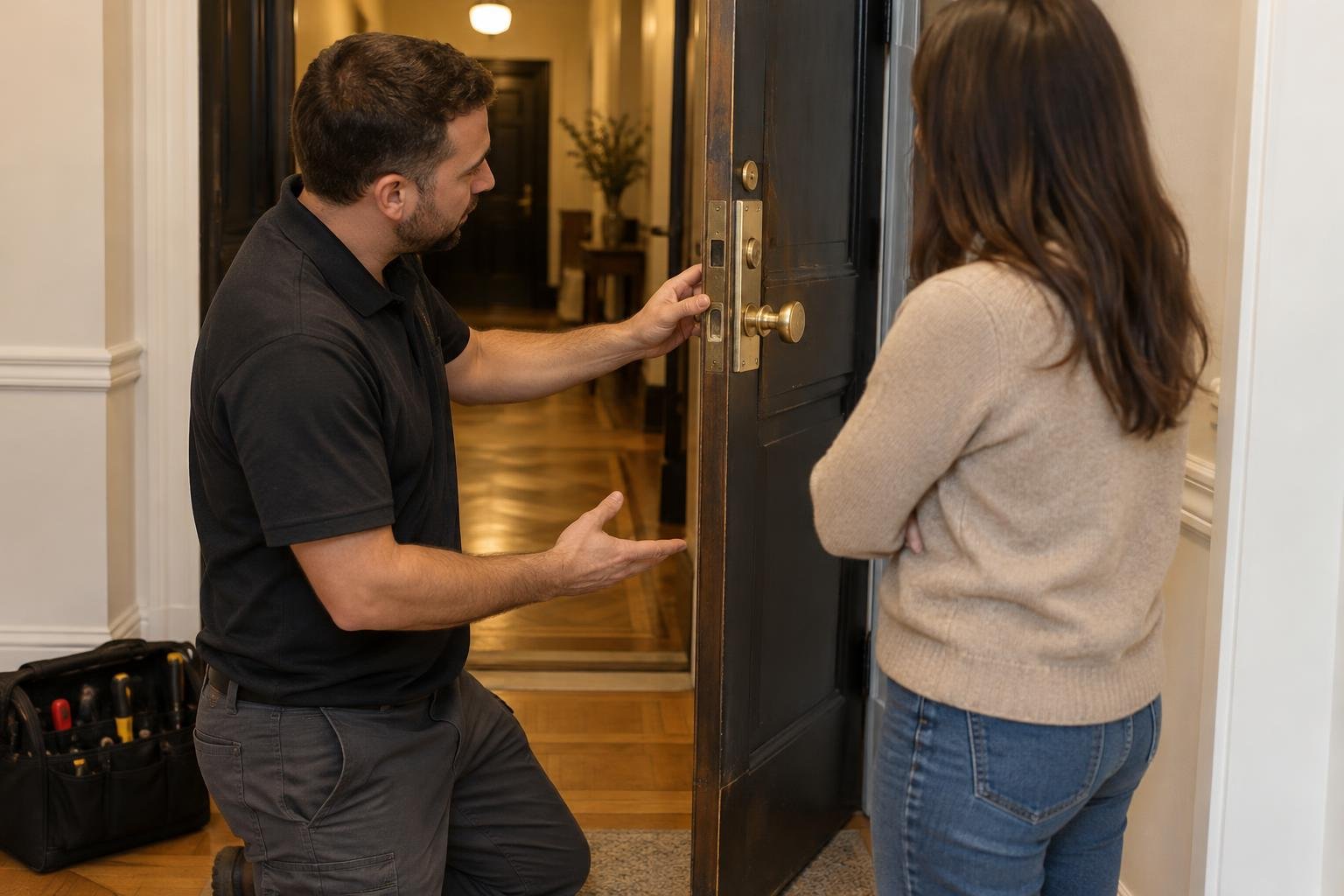
Arrange prompt help if the door will not secure, the key is close to snapping, or the inside handle cannot reliably release the latch. A door that looks closed but does not latch leaves the entrance unsecured. Difficulty opening from inside also raises an exit-safety concern.
If a key breaks, leave the remaining piece alone. Pushing another key or a tool into the cylinder can drive the fragment deeper. If you are locked out, avoid climbing through windows, using fire escapes as an improvised entry route, or trying to force the door.
After suspected forced entry, prioritize personal safety. If there may be an intruder or immediate danger, move to safety and call 911. Once it is safe to arrange repairs, describe any damage to the lock, strike, and frame. A working replacement cylinder does not make a damaged frame secure.
What renters and building managers should coordinate
For an apartment lock, notify your landlord, superintendent, or managing agent and check the applicable building requirements before authorizing changes. Co-op and condo rules may address exterior appearance, approved hardware, and access arrangements. Responsibility for repairs can depend on the circumstances and your agreement; do not assume every repair is automatically the resident’s or landlord’s expense.
Management should authorize work on shared entrances. Explain whether a building key system is involved, and have someone available who can approve the scope of work. Be prepared to show identification and proof that you are authorized to access the property. If your documents are locked inside, explain that when you call so the access-verification process can be discussed.
What to expect from a mobile repair visit
When contacting LEO Locksmith, give the street address, cross street, apartment or entrance location, and a plain-language description of the fault. Say whether you are locked out, whether the door can currently be secured, and whether the lock works differently with the door open. Mention doorman check-in or other building access instructions.
LEO Locksmith is based in Hollis, Queens, and provides 24/7 mobile service across Manhattan and all five NYC boroughs. Live human dispatch can discuss your situation. Typical response times are 15–30 minutes, but traffic, technician availability, and building access can affect arrival; that range is not a promise.
The technician assesses the problem and quotes the price on site before any work starts. For a lockout, non-destructive entry is used when possible, although the lock’s condition may limit the available options. After a repair, ask to test normal locking and unlocking from both sides, confirm the latch engages, and check that the door opens reliably from inside.
Need door lock repair on the Upper West Side?
You should not need to wrestle with your door every time you come home. Whether you have a sticking apartment deadbolt, worn mortise hardware, or a shared entrance that will not latch, explain the symptoms and get a clear assessment before approving work. Call LEO Locksmith at 929-764-7097 for 24/7 mobile assistance.
Frequently Asked Questions
Can a sticky apartment lock be repaired without replacing it?
Often, but it depends on the cause. A worn key, loose component, or misaligned strike may be addressed without replacing the whole lock. A technician needs to inspect the hardware to determine whether repair is practical.
Why does my deadbolt work only when I pull on the door?
The bolt may not be lining up with the strike opening. Door movement, loose hinges, weatherstripping, or other alignment issues can create pressure on the bolt. Forcing the key can damage it without fixing the cause.
Should I tell my landlord before arranging lock repair?
Notify your landlord or managing agent and check applicable requirements before authorizing changes. Shared-entrance work should be authorized by management. Repair responsibility and access arrangements depend on your circumstances and agreement.
Can LEO Locksmith assess an older mortise lock?
LEO Locksmith provides residential door lock repair and can assess older apartment hardware on site. Whether a mortise lock can be repaired depends on its condition and the availability of compatible parts.
How is the price for door lock repair determined?
The technician quotes the price on site before any work starts, after assessing the door and lock. Describe the symptoms when calling, including whether you are locked out or unable to secure the entrance.