Need an emergency locksmith in Oakland Gardens, Queens? LEO Locksmith provides 24/7 mobile help for home, business, and vehicle lockouts, broken keys, and locks that won’t secure, with live human dispatch and a technician who quotes the price on site before work starts. While you arrange help, stay somewhere safe and avoid forcing the key or door—extra damage can turn an access problem into a larger repair.
Start with safety, not the lock
A lockout outside your apartment is frustrating. A child alone inside, smoke coming from a home, or someone trapped in a vehicle is a different situation. If there is immediate danger, call 911 first rather than waiting for a locksmith.
For an ordinary lockout, take a moment to check your options without creating another risk:
- Check for an authorized spare. A household member, building superintendent, or property manager may have one.
- Confirm which door is locked. A shared building entrance and your apartment door may require different permissions and different work.
- Move out of traffic and bad weather. Wait in a safe, visible location and tell dispatch if you need to step away from the address.
- Leave the hardware alone. Don’t pry the door, push objects into the keyway, or keep twisting a key that feels ready to snap.
Avoid climbing to a balcony or trying an upper-floor window. In Oakland Gardens’ mix of apartment buildings and houses, an apparently reachable alternate entrance can still mean a serious fall or damage to someone else’s property.
What to tell dispatch in Oakland Gardens
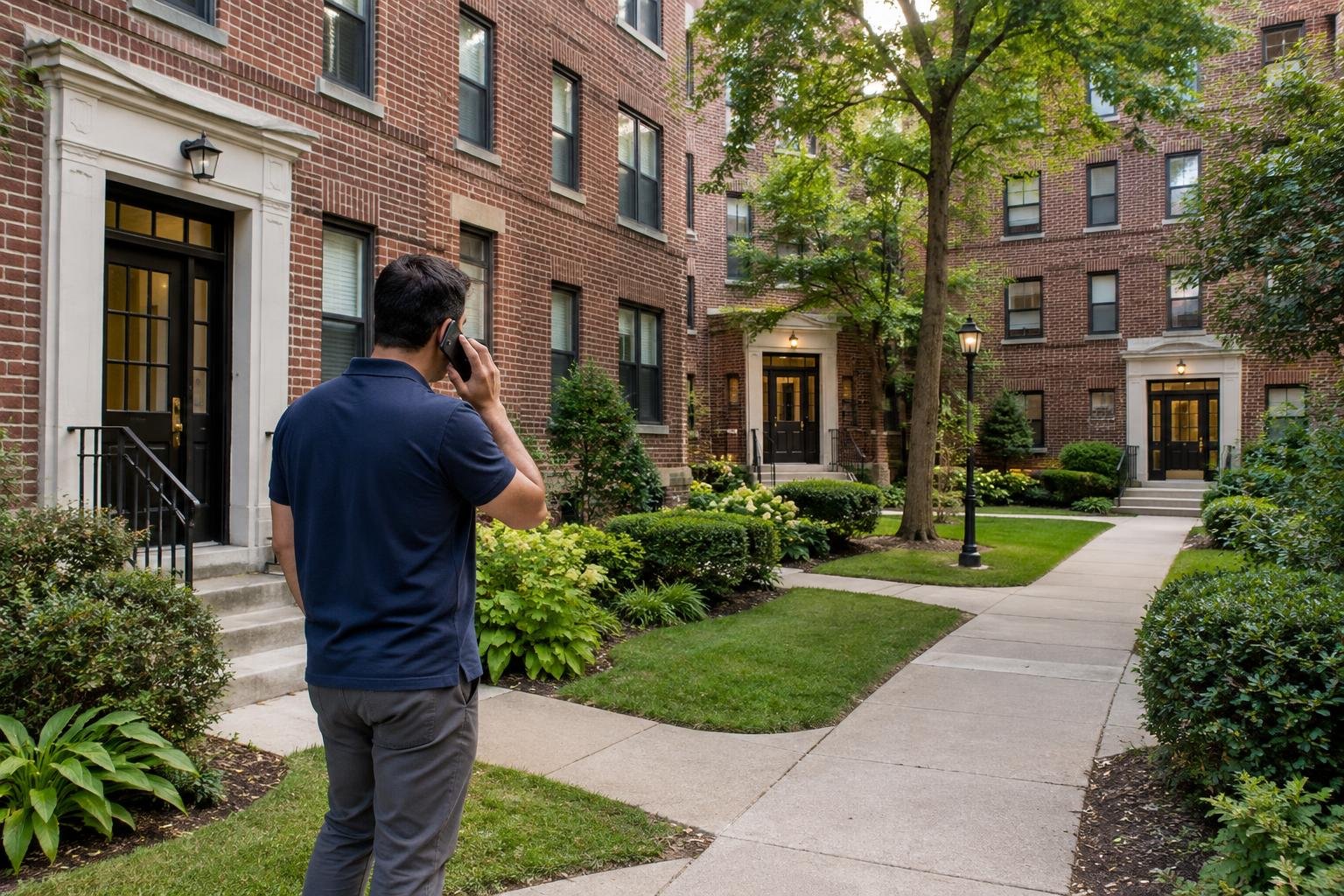
Clear location details help a mobile technician find the right entrance and arrive prepared. Give the full street address, including any hyphenated house number exactly as it appears, plus your apartment or unit number. Nearby roads such as Springfield Boulevard, Bell Boulevard, or the service roads around the Long Island Expressway can help orient the call, but they don’t replace the exact address.
For a garden-apartment property, identify the building entrance rather than just the development name. Mention a courtyard-facing door, a separate side entrance, or a locked outer vestibule. If you are at a business, explain whether the problem is at the customer entrance, rear door, or another authorized access point.
A quick checklist before you call
- Your location: Address, cross street, unit, and entrance instructions.
- The problem: Keys inside, keys missing, broken key, spinning cylinder, or a door that won’t latch.
- The hardware: Deadbolt, mortise lock, keypad, storefront lock, or vehicle lock.
- Your access status: Whether you are outside, inside, or able to enter through another authorized door.
- Any urgency: An unsecured property, an exposed doorway, or a safety concern.
LEO Locksmith is based in Hollis, Queens, and serves all five boroughs. Typical response times are 15–30 minutes, but traffic, weather, technician availability, and the exact location can affect arrival. Ask dispatch for the current estimate rather than planning around a guaranteed time.
What happens when the locksmith arrives?
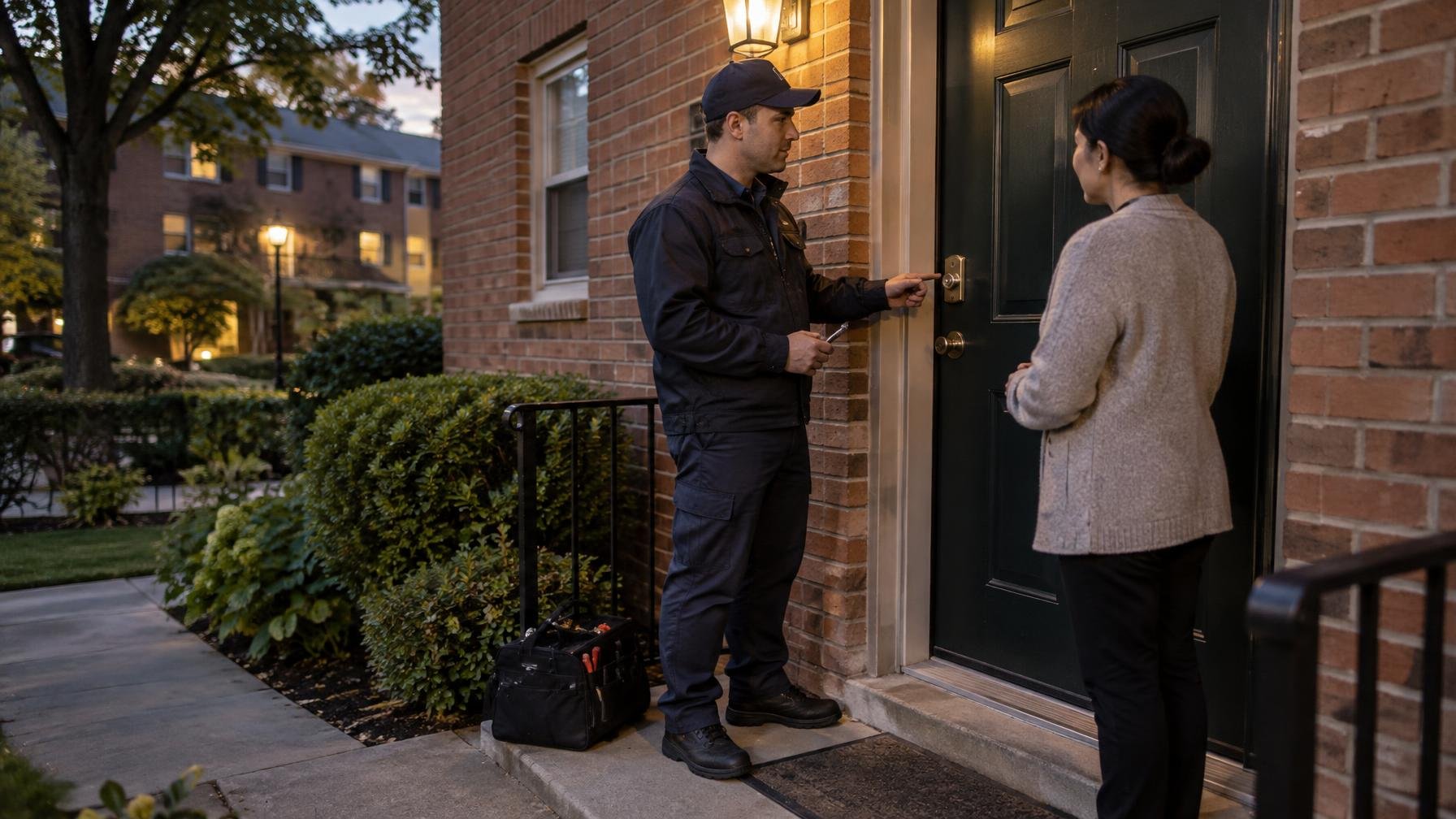
The technician first needs to understand the problem and confirm that you are authorized to access the property or vehicle. Have identification and relevant proof of occupancy, ownership, or authorization available. If your documents are locked inside, explain that when calling so the technician can discuss how authorization may be established.
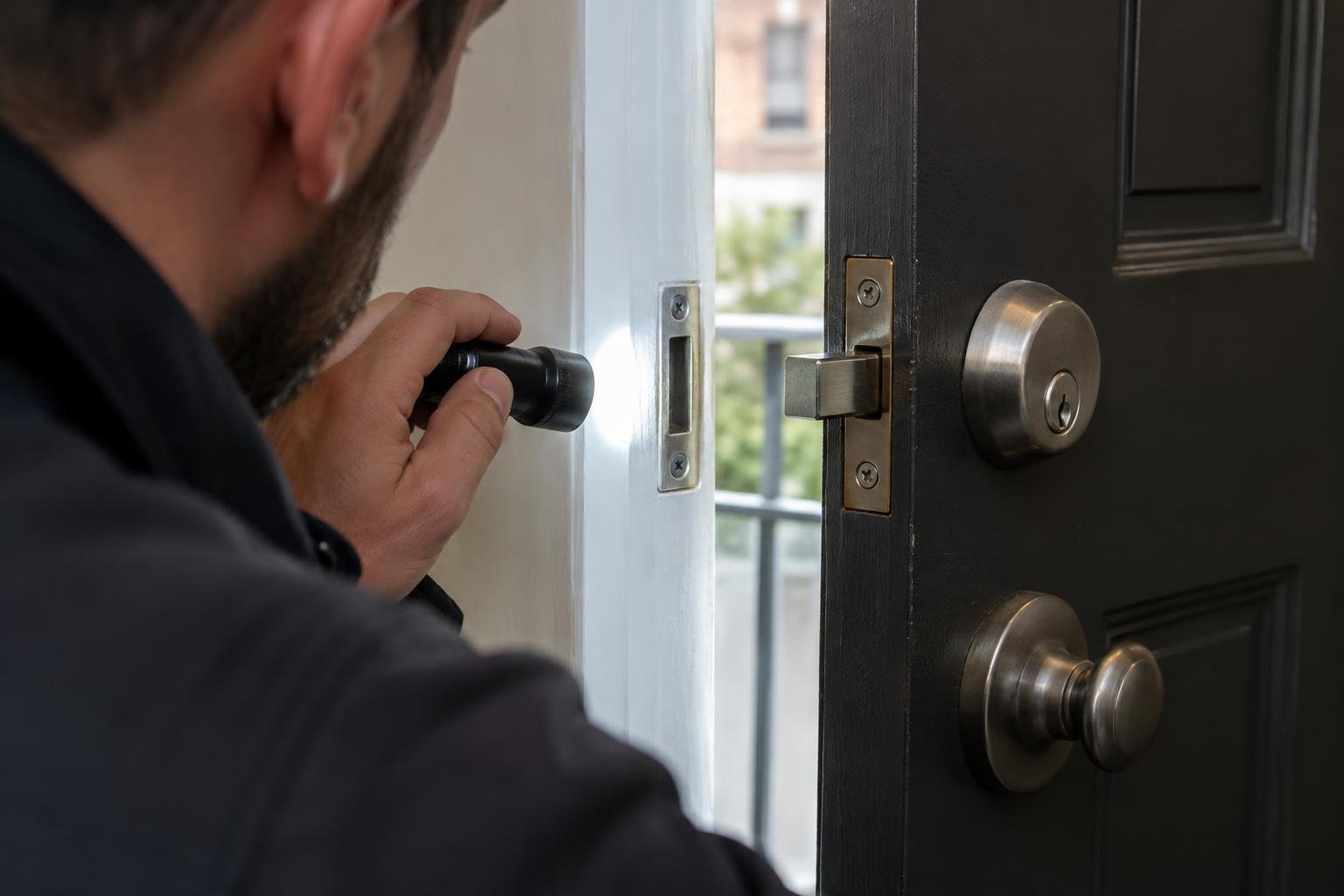
Next comes an assessment of the door and lock. A key that won’t turn does not always mean the cylinder has failed. The door may be pressing against the frame, the bolt may be misaligned, or part of the hardware may be loose. Those differences matter because opening the door and fixing the underlying problem are not always the same task.
The technician quotes the price on site before any work starts. Ask what the proposed work includes: entry only, repair, rekeying, or replacement. If the assessment reveals another issue, ask for an explanation and the price for that work before authorizing it.
Will the lock need to be drilled?
Not automatically. LEO Locksmith prioritizes non-destructive entry when possible. Whether that is appropriate depends on the lock’s condition, the type of hardware, and what caused the lockout. A damaged cylinder or failed internal mechanism may limit the options.
Before authorizing a destructive method, ask why it is needed and what will be required to secure the door afterward. For more about access assistance, see LEO’s lockout service.
Common emergency lock problems—and what they may need
Your keys are inside, but the lock works
When a functioning door closes behind you, the immediate goal is authorized entry with as little disruption as possible. Replacement may not be necessary. Once inside, test the lock from both sides with the door open before closing it again, and keep the key in your hand during the check.
Your keys are lost or may have been stolen
Getting back inside solves only the access problem. If someone else may have your keys—especially alongside information identifying your address—discuss changing which keys operate the lock. Rekeying an existing lock may be appropriate when the hardware is compatible and in good condition. Damaged or unsuitable hardware may call for replacement instead.
The key broke in the cylinder
Stop inserting the remaining piece or another key. That can push the fragment deeper or damage the mechanism. Broken key extraction may preserve the lock, but the technician should also check why the key broke. A worn key, binding cylinder, or misaligned door can cause the same problem again if left unresolved.
The door closes but will not lock
This is a security problem even if you can still get inside. Note whether the bolt operates with the door open but not when it is closed. That observation can help identify an alignment issue, although it is not a complete diagnosis. LEO’s door lock repair service covers problems such as sticking cylinders, loose handles, and misaligned deadbolts.
Special considerations for Oakland Gardens properties
Renters, co-op residents, and shared entrances
If you rent or live in a managed building, notify your landlord, superintendent, or managing agent when practical. Building rules and authorization requirements may affect changes to apartment hardware, and shared entrance locks should not be altered independently. Explain whether you need entry into your own unit or work on a common door.
For replacement hardware, compatibility matters beyond appearance. Existing mortise locks, door preparation, and building access arrangements can affect the available options. Any proposed change should preserve safe exit and required door-closing functions. Don’t disable a closer or leave a shared entrance propped open as a workaround.
Houses and weather-related sticking
Seasonal humidity and temperature changes can contribute to a door binding against its frame. If locking the door requires lifting the handle, pulling hard, or leaning against it, describe that symptom. A new cylinder alone may not solve the issue. Avoid repeatedly slamming the door or forcing the bolt while waiting for an assessment.
Storefronts and offices
For a business lockout, have an authorized owner, manager, or designated contact available. Tell dispatch if the hardware is on a glass storefront door or if an electronic credential is involved. After access is restored, check that the entrance locks properly and that people inside can exit safely. Following suspected forced entry, prioritize personal safety and contact police as appropriate before disturbing the area.
Locked out of your car in Oakland Gardens?
Give dispatch the vehicle’s year, make, model, and exact location, along with whether the keys are visible inside or completely missing. For a parking lot, identify the entrance and a useful landmark. For a roadside location, explain which side of the street or service road you are on without standing in traffic to investigate.
A vehicle lockout and a lost-key job need different preparation. Transponder keys and fobs can involve programming, and compatibility varies by vehicle. Describe whether you have a spare, a damaged fob, or no working key at all. Don’t wedge the door or improvise tools; that can damage seals, trim, or wiring.
Call LEO Locksmith for emergency help in Oakland Gardens
Whether you are locked out or cannot secure your door, LEO Locksmith offers 24/7 mobile service in Oakland Gardens and throughout Queens, Brooklyn, Manhattan, the Bronx, and Staten Island. Tell live dispatch where you are and what happened; the technician will assess the problem and quote the price on site before work starts.
Call LEO Locksmith at 929-764-7097.
Frequently Asked Questions
How quickly can a locksmith reach Oakland Gardens, Queens?
LEO Locksmith’s typical response time is 15–30 minutes, but arrival depends on traffic, weather, technician availability, and your exact location. Ask live dispatch for the current estimate; response times are not guaranteed.
Will I need a new lock after an apartment lockout?
Not necessarily. If the lock is functioning and your keys are inside, entry may be possible without replacing it. LEO Locksmith prioritizes non-destructive entry when possible, and the technician will explain any repair or replacement recommendation.
What if my ID is locked inside my apartment or car?
Tell dispatch before the technician arrives. The technician needs to establish that you are authorized to access the property or vehicle and can discuss what documentation or verification may be appropriate.
Should I rekey my lock after losing my keys?
Rekeying is worth discussing if someone else could use the missing keys, particularly if they can identify your address. It changes which key operates compatible, serviceable hardware without necessarily replacing the entire lock.
When will I know the price for emergency locksmith service?
The technician quotes the price on site before any work starts. Ask whether the proposed work includes entry only or additional repair, rekeying, or replacement.